Drawing note 02
Method, revision 3
How a sheet is drawn, and what fails it.
A section is only as good as the operations behind it. Ours run in a fixed order, and a sheet cannot skip a step to meet a publication date. The order matters because each operation produces the input for the next one: the record gives the measurement its unit, the measurement gives the signature something to bind, and the signature gives the comparison a date to work from.
We publish two kinds of sheet. A field sheet cuts across a physical corridor at a named station. A file sheet cuts across a funding or approval record at a named year. Both use the same five operations, and both carry the same revision rule at the bottom.
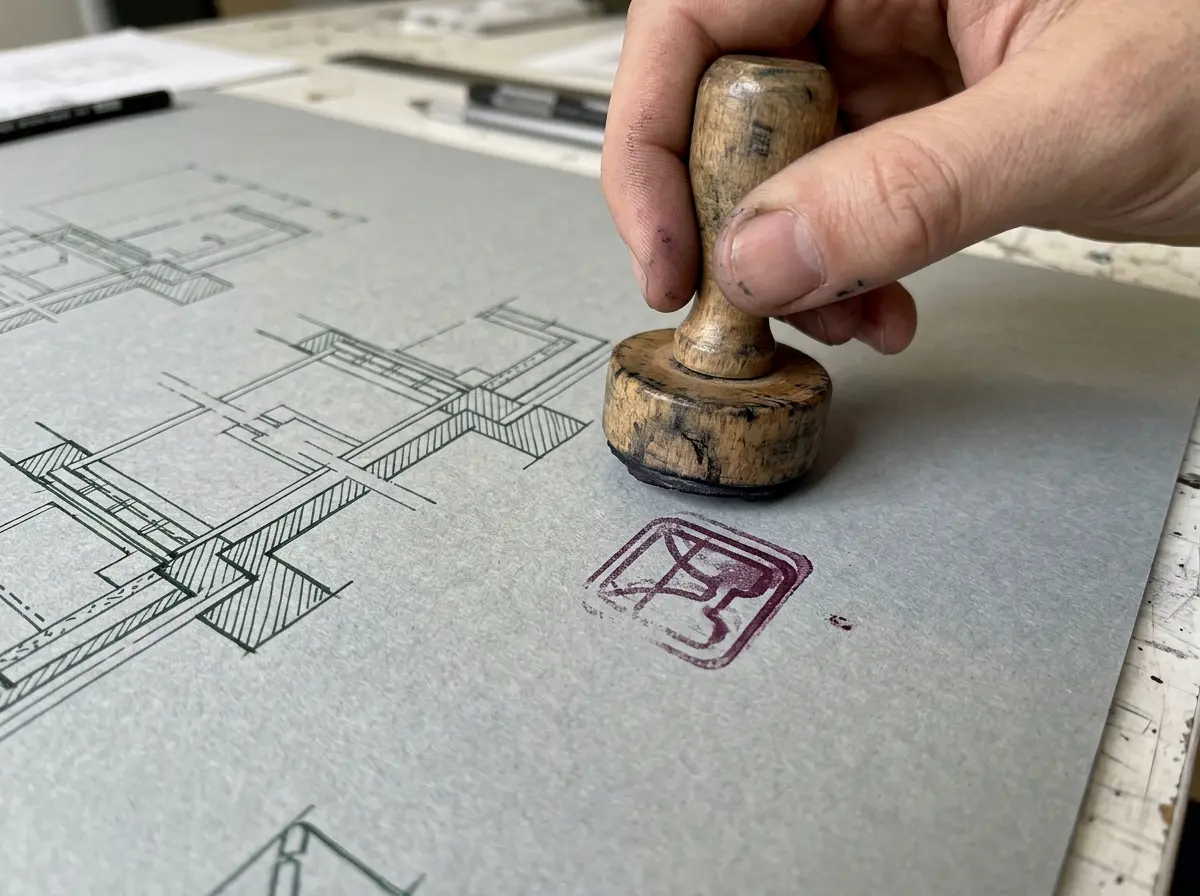
The five operations
In order, no skipping
| Op | What the desk does | What fails the sheet |
|---|---|---|
| 01Record | Pull the document that created the decision: the council act, the grant award, the permit, the utility agreement or the bid tabulation. The document number goes into the sheet margin. | A decision that exists only in a press release or a staff comment. |
| 02Measure | Convert the document into the dimensions a resident would recognise: feet of right of way, days of closure, dollars obligated this year, inches of main. | A figure that cannot be traced to a stated unit or a stated year. |
| 03Sign | Name the official or the engineer of record whose seal or initials make the document binding, and record the date the signature was applied. | A document attributed to an agency with no named signer. |
| 04Compare | Set the schedule against the appropriation and the permit clock. Most delay lives in the gap between those three columns, not in the construction itself. | A delay story with only one clock in it. |
| 05File | Number the revision, store the sheet, and publish the as built note when construction ends. The file is the part of the drawing that outlives the news. | A revision with no note describing what changed. |
Exclusions
Not drawn
What this desk will not put on a sheet
- Opinion columns about whether a project is good. The drawing shows what a decision commits, and the reader keeps the verdict.
- Renders supplied by a contractor without the underlying dimensions.
- Any number that cannot be traced to a document number we are willing to print.
- Anonymous sourcing for a factual claim that a public record can settle.
The revision rule is simple. A changed measurement bumps the revision number, and the sheet carries a line saying which figure moved. A changed conclusion without a changed figure is not a revision, it is a new sheet, and it gets a new number. Readers who spot an error should use the corrections desk, which reaches the same editor who approved the original drawing.