Drawing note 01
The desk, its habits
A small desk that draws the corridor one cut at a time.
Beltway Herald is written and drawn by a three person desk: an editor who reads the budget, a researcher who pulls the permits and utility records, and a licensed engineer who checks every section before it is filed. We publish from the capital corridor, which for us means the District line, the Virginia and Maryland approaches, and the federal properties that sit between them.
The desk began with a complaint that is common in this region: two people can read the same project notice and come away with opposite beliefs about whether anything will be built. Usually both readers are working from the same missing layer. One is looking at the schedule, the other at the appropriation, and neither has seen the permit that governs the sidewalk.
01
What we draw
Public works, cut to the layer that decides
Our subject is the ordinary infrastructure of the region: bus lanes, sidewalks, water mains, bridge decks, storm drains, signal cabinets, and the review rooms where those things are approved. We choose a decision that already has a document behind it. A proposal with no drawing, no permit number and no budget line is a rumor, and we leave rumors alone.
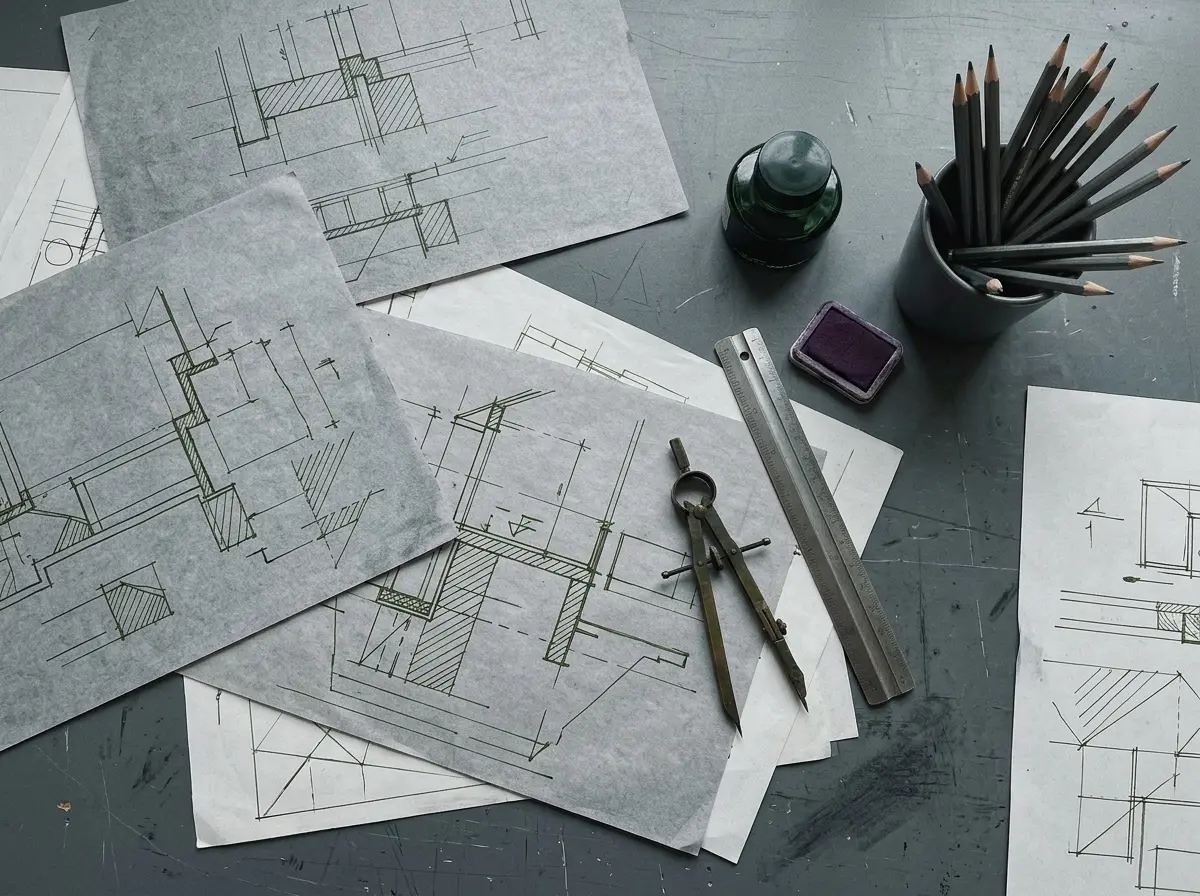
Every sheet names the line it cuts along. On a street project that line runs across the right of way at a stated station. On a budget story the same line runs through the funding years. The cut is a reporting device, not a metaphor: if we cannot say where the line falls, we do not have a sheet.
02
Who signs
One name at the bottom of each drawing
The engineer of record checks dimensions, clearances and the arithmetic in every measurement block. The editor checks that each claim traces to a document a reader can request. When the two disagree, the drawing waits. We would rather miss a week than publish a section that cannot be defended in a public meeting.
The desk does not accept sponsored sections, and no outside party reviews a drawing before publication. If a correction changes a measurement, the revision number moves and the old sheet stays in the file with a note explaining what changed.
03
Who reads it
Residents, staff, and the person at the meeting
Our readers are people who have to sit through a public meeting and want to know which agency actually holds the pen. They include block associations, advisory neighborhood commissioners, city staff preparing testimony, and reporters at other outlets who need a section they can cite. We write for the reader who will check our numbers against the source document, which is why the source document is always named.